Headaches & Migraines in Islington
Not all headaches are the same, and the distinction matters because it determines what will help. Our chiropractors, physiotherapists and acupuncturists work with headaches that have a musculoskeletal component, and with migraine prevention.
We describe our care in terms of what the evidence supports. Chiropractic is used for cervicogenic headache and for migraine prevention rather than for treating a migraine attack itself, and acupuncture is used for tension-type headache and migraine prophylaxis.
Symptoms described by our patients
- Tension building through the head, often band-like
- An ache at the back of the skull
- Pain referring forwards into the eye sockets
- Tightness through the neck and upper shoulders accompanying the headache
- Headaches that worsen towards the end of a working day
The types we work with
Tension-type headache. The most common form. Usually bilateral, pressing rather than throbbing, and frequently linked to sustained postures, stress and jaw or neck muscle tension.
Cervicogenic headache. Referred from the joints and soft tissues of the upper neck. Often one-sided, starting at the base of the skull and spreading forwards, and provoked by neck movement or position.
Migraine. A neurological condition, typically involving moderate to severe headache with sensitivity to light or sound, nausea, and sometimes visual aura. Our role here is preventative rather than treating an attack in progress.
Our approach
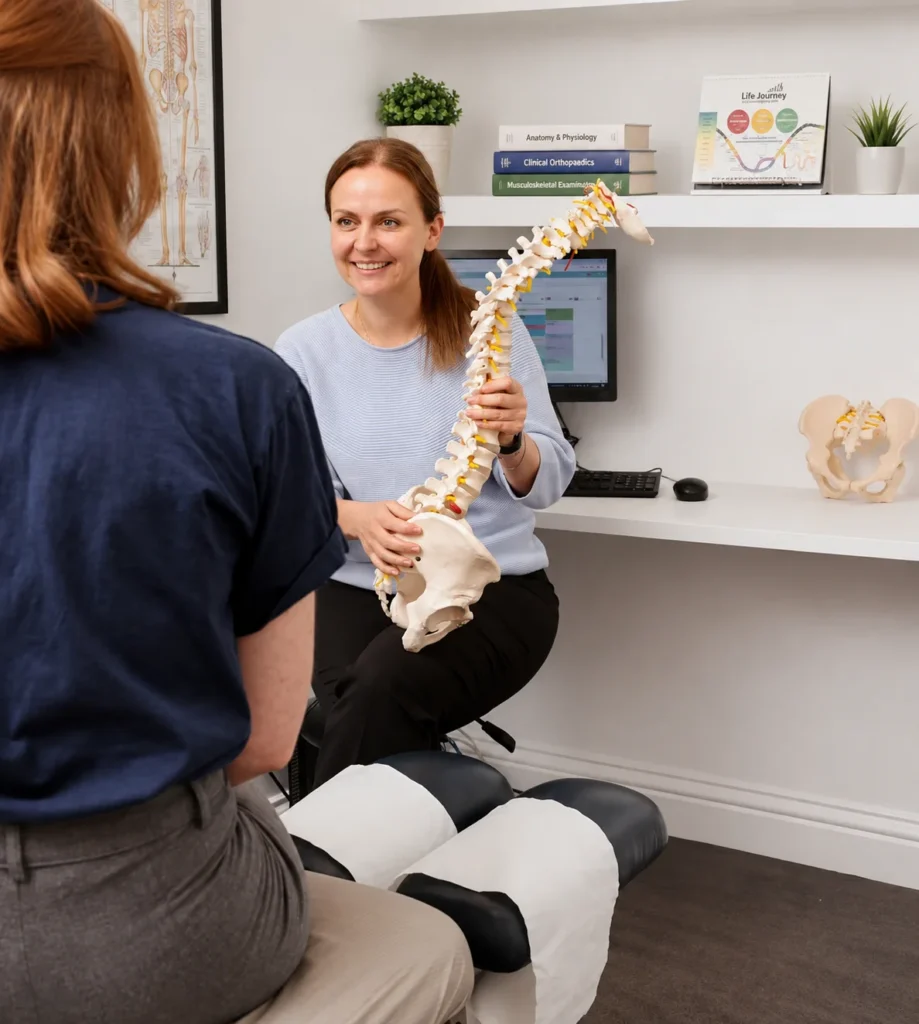
Assessment begins by working out what kind of headache you are experiencing, which involves questions about location, frequency, duration, triggers, aura and any medication you use. Where the picture points to a musculoskeletal contribution, examination focuses on the upper cervical spine, the jaw and the muscles of the neck and shoulder girdle.
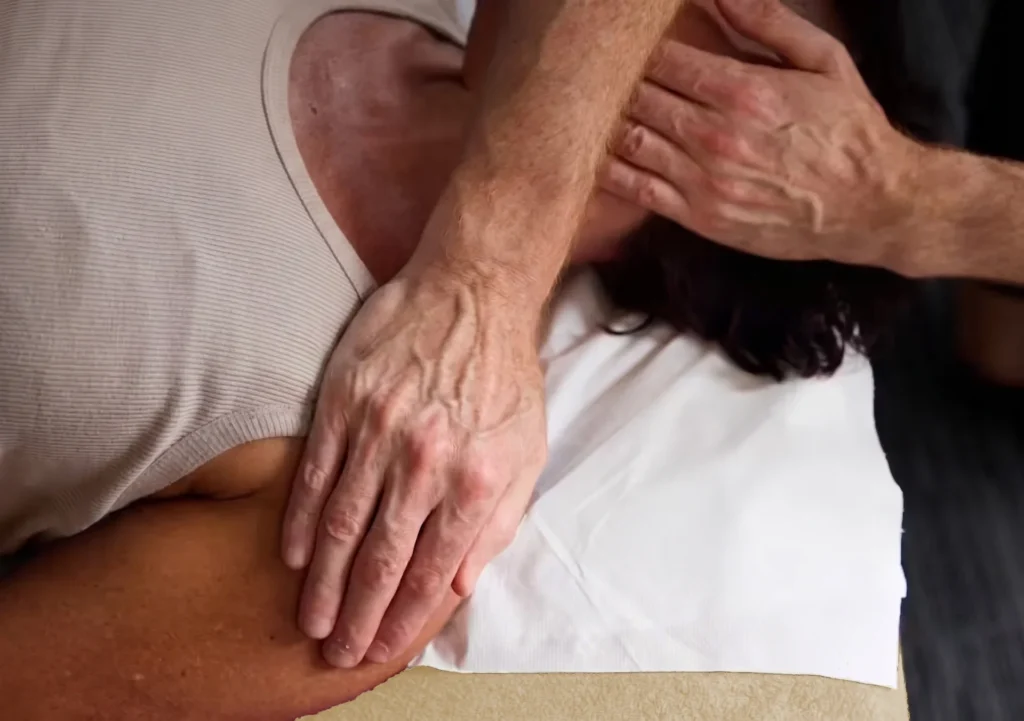
Treatment may combine chiropractic or physiotherapy for the neck, acupuncture, and massage to reduce muscular tension. Alongside that we look at the practical contributors, which commonly include screen height, sleep position, hydration, caffeine and stress load.
Keeping a headache diary
If you can, note down for a fortnight before your appointment when each headache starts, how long it lasts, where the pain sits, what you had eaten and drunk, how you had slept, and anything that seemed to help. Patterns emerge from this that are difficult to recall accurately in a consultation.
Get medical help urgently if
A headache comes on suddenly and severely, follows a head injury, comes with fever and a stiff neck or a rash, is accompanied by weakness, confusion, slurred speech or visual loss, or is markedly different from your usual headaches. Contact NHS 111 or attend A&E.
Practitioners
Qualifications, registration numbers and clinical interests are set out on each team member’s profile.

Fees
Your first assessment is £99 for 45 minutes with a chiropractor or physiotherapist. If acupuncture or massage is recommended as part of your treatment plan, you can book a separate session with the relevant therapist. These sessions last one hour. Please see our fees page for follow-up appointment rates and treatment packages.
Questions
Can treatment stop a migraine attack?
No, and we would not claim otherwise. Where chiropractic care is used, it is directed at reducing the frequency of migraines over time rather than at an attack in progress.
How do I know if my headache comes from my neck?
Cervicogenic headaches are usually one-sided, begin at the base of the skull and can be provoked or eased by neck movement and position. Assessment at the clinic can help clarify this.
Should I still see my GP?
Yes, particularly if headaches are frequent, worsening, or you are relying on painkillers several days a week. Our care sits alongside medical management rather than replacing it.