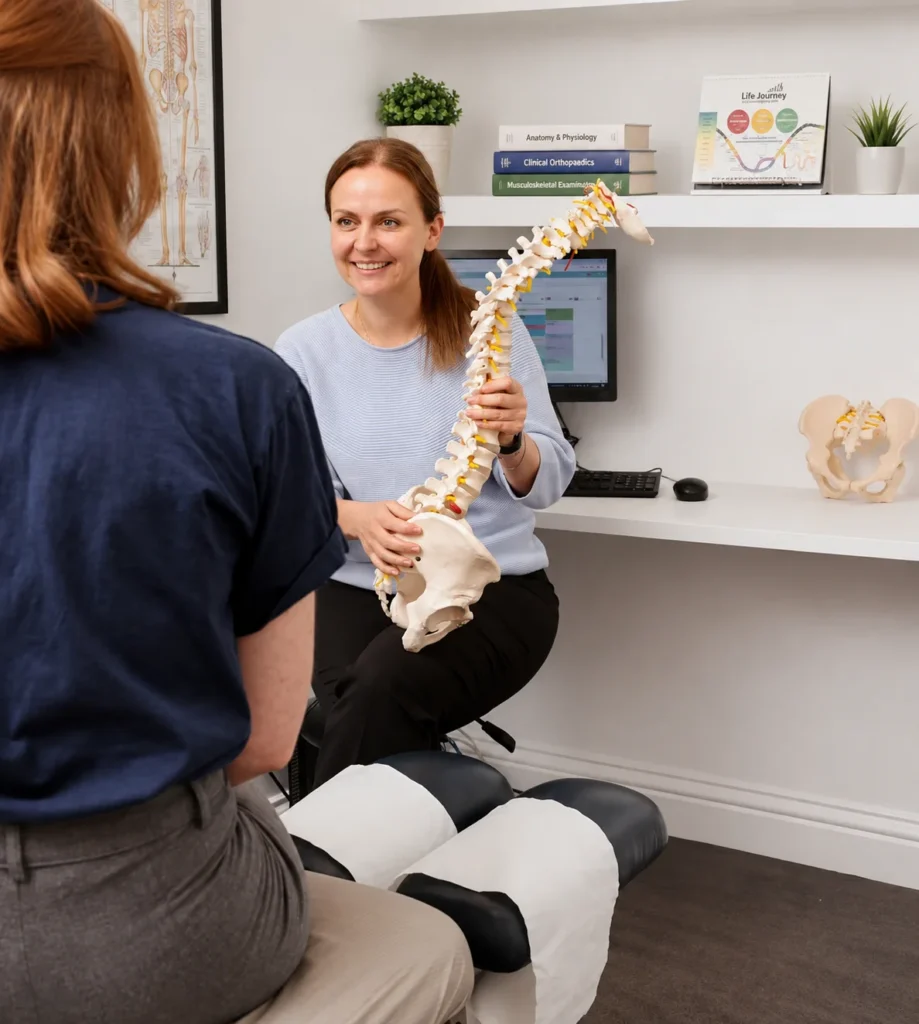
Lower Back Pain Treatment in Islington
Back pain is the single most common reason people come to see us. Most cases are mechanical, meaning the pain comes from the joints, discs, muscles and ligaments of the spine rather than from anything sinister, and most respond well to hands-on treatment combined with the right movement and loading advice.
How back pain feels
- A deep, dull ache across the lower back
- Muscle spasm that grips and eases
- Sharp pain on specific movements such as bending or twisting
- Shooting pain travelling into the buttock, leg and/ or foot
- Stiffness, particularly first thing in the morning or after sitting
- Soreness to touch across the lower back
- Numbness or pins and needles in the leg and / or foot
- Pain on changing position, i.e. sitting to standing, turning in bed
What we see most often
Acute back pain. Pain that has come on recently, often after a lift, an awkward movement or no obvious trigger at all. It can be severe but usually settles over weeks.
Chronic back pain. Pain persisting beyond three months, often with periods of improvement and flare-up. Management here focuses as much on building capacity as on settling symptoms.
Disc herniation. Where the outer wall of an intervertebral disc bulges or tears and the inner material presses on nearby structures, sometimes producing leg symptoms.
Sciatica. Pain following the path of the sciatic nerve into the buttock, thigh and lower leg, often with pins and needles or weakness. This is covered in more depth on our leg and arm pain page.
Facet joint pain. Arising from the small paired joints at the back of the spine. Typically worse on extending or rotating the spine.
Lumbago. A general term for pain in the lower back region.
Treatment at the clinic
We offer several routes, and the right one depends on your presentation.
Chiropractic for joint restriction, mechanical back pain, lumbago and sciatica, using diversified technique, flexion-distraction, activator, dry needling and trigger point work.
Physiotherapy where progressive loading, strength and movement retraining are the priority, particularly with disc-related pain and recurring episodes.
Acupuncture for chronic and musculoskeletal pain.
Sports and therapeutic massage to reduce muscular tension and spasm contributing to your symptoms, usually alongside one of the above.
Care follows NICE guideline NG59, which covers the assessment and management of low back pain and sciatica in over 16s.
Your assessment
Your first appointment includes a detailed history and physical examination, with neurological testing if you have symptoms affecting the leg.
Your practitioner will explain what they believe is causing your symptoms, discuss a personalised treatment plan, and, where appropriate, begin treatment on the day.
For most types of back pain, staying active is more helpful than prolonged rest. You’ll receive clear, practical advice on what you can do — and what to avoid — while your symptoms settle.
When to seek urgent medical help
Contact your GP or attend A&E rather than booking with us if you have back pain alongside difficulty passing urine or loss of bladder or bowel control, numbness around the back passage or genitals, weakness in both legs, unexplained weight loss, or fever. These are uncommon, but they need same-day medical assessment.

Practitioners Treating Back Pain
Qualifications, registration numbers and clinical interests are set out on each team member’s profile.
Fees
A chiropractic or physiotherapy assessment for back pain is £99 for 45 minutes, and acupuncture and massage sessions are £85 for an hour. Follow-up rates, package savings and recognised insurers are all set out on our fees page.
Common Questions
Should I rest or keep moving?
Keep moving within comfort. Prolonged bed rest tends to prolong the problem. Your practitioner will tell you which movements to prioritise.
Do I need a scan?
Usually not. Imaging rarely changes management for straightforward mechanical back pain, and NICE advises against routine imaging in non-specialist settings. If your assessment suggests it is needed, we will tell you.
How long will it take to improve?
Many acute episodes improve noticeably within a few weeks. Longer-standing pain generally takes longer and benefits from a structured plan rather than occasional treatment.