Verruca Treatment in Islington
Verrucae are warts on the foot, caused by the human papilloma virus. Many clear on their own eventually, but eventually can mean a very long time, and a painful verruca on a weight-bearing part of the foot is not something most people are willing to wait out.
How to recognise a verruca
- Pain in the sole of the foot, particularly when squeezed from the sides
- A rough surface texture rather than a smooth one
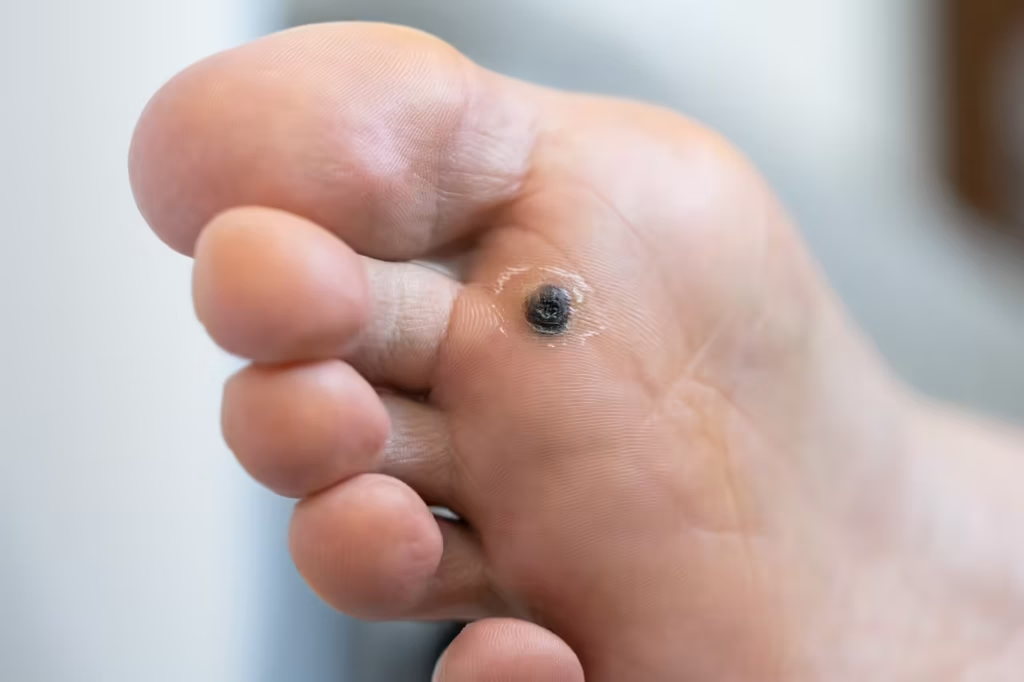
- Small black dots on or around the area of rough skin
- Lesions appearing in clusters
- Interruption of the normal skin lines across the lesion
The black dots people notice are tiny capillaries within the lesion, and they are one of the features that distinguish a verruca from a corn. Because they can look similar, professional assessment is worth having before treating anything at home.
Treatment options here
Topical treatment. Applied in clinic over a course of appointments, with debridement of the overlying hard skin so the preparation can reach the lesion. This is the usual starting point.
Verruca needling. Used where topical treatment has not worked, or where lesions are large or numerous. Carried out under local anaesthetic, the technique deliberately introduces viral particles to the deeper tissue to prompt an immune response against the virus. One treatment is often sufficient, and the procedure page covers it in detail.
Practical advice
Verrucae are contagious through direct contact and via damp surfaces such as changing room and pool floors. Cover the lesion with a waterproof plaster for swimming, use flip-flops in communal areas, keep your own towel, and avoid picking at the lesion, which spreads the virus to adjacent skin.
Fees
Topical treatment appointments are £65, with 15-minute follow-ups at £40. Needling is £250 as a one-off procedure. See the fees page for everything else.
Practitioners
Both work across the full range of our podiatry care.
Fees
Topical treatment appointments are £65, with 15-minute follow-ups at £40. Needling is £250 as a one-off procedure. See the fees page for everything else.
Questions
Will a verruca go away on its own?
Many do, particularly in children, but it can take months or years. Treatment is worth considering if it is painful, spreading or persistent.
Are shop-bought verruca treatments any good?
They can work on straightforward lesions but are frequently applied to something that turns out not to be a verruca, and the acid can damage surrounding healthy skin. Having it assessed first is sensible.
Can I pass it to my family?
It is possible. Keep towels separate, avoid sharing footwear, and cover the lesion in shared bathrooms.
Why do I keep getting them?
Susceptibility varies between individuals, and reinfection from communal wet areas is common. Your podiatrist will discuss prevention alongside treatment.