Chiropody & Podiatry Explained
Chiropody and podiatry in Islington N1 are provided by our HCPC-registered podiatrists, offering assessment and treatment for a wide range of foot and lower-limb conditions.
Our podiatry service covers routine foot care, skin and nail conditions, biomechanical assessment and nail surgery. Treatment is tailored to your individual presentation, whether you need help with a painful corn or callus, an ingrowing toenail, a skin or nail condition, or pain affecting your feet and lower limbs.
Our clinic is located on Prebend Street, Islington, providing professional podiatric care in a clinical setting.
What is the difference between podiatry and chiropody?
In the UK, podiatry and chiropody refer to the same regulated profession. The term podiatrist is now more commonly used, although chiropodist remains widely recognised by patients.
Podiatrists in the UK are regulated by the Health and Care Professions Council (HCPC). You can check that a practitioner is registered before receiving treatment.
What do our podiatrists treat?
Our podiatry and chiropody service covers three broad areas:
- Routine foot care: Treatment for problems such as hard skin, corns, calluses and overgrown or difficult-to-manage nails.
- Skin and nail conditions: Assessment and treatment of conditions including verrucae, fungal nail infections and ingrowing toenails.
- Biomechanical assessment: Assessment of how your feet and lower limbs function when standing, walking and during other activities. This can help investigate pain affecting areas such as the heel, arch or forefoot and identify factors that may be contributing to your symptoms.
Where appropriate, your podiatrist will explain their findings and discuss the available treatment options with you.
Conditions treated
- Heel pain and plantar fasciitis
- Biomechanical problems of the foot
- Foot complications associated with diabetes
- Skin conditions of the foot, including athlete’s foot
- Ingrowing toenails, including nail surgery
- Fungal toenails
- Verrucae, including verruca needling
- Callus, corns and hard skin
- Routine toenail cutting and general foot care
Your appointment
An initial appointment takes 30 minutes. Your podiatrist will look at your feet, ask about your symptoms, footwear, activity and general health, and where relevant assess how you walk. Many problems can be treated in that same appointment, with corns, callus and nail care usually dealt with on the day.
Where a problem needs a course of treatment or a surgical procedure, your podiatrist will explain the options, what each involves and what recovery looks like, and you can take time to decide. Where foot mechanics are contributing to pain further up the leg, they may also suggest an assessment with one of our physiotherapists.
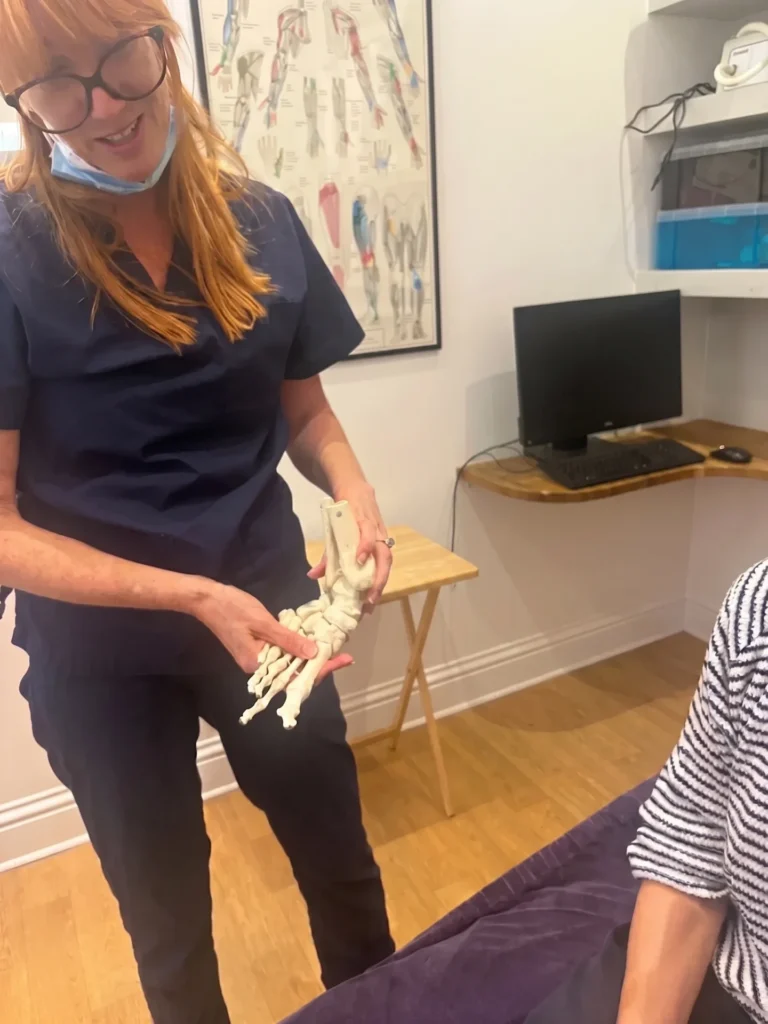
Our Podiatrists
Qualifications, registration numbers and clinical interests are set out on each team member’s profile.
Fees
Nail surgery is quoted individually at your assessment, as the fee depends on the procedure required. Charges across the clinic are listed on the fees page.
| Appointment | Duration | Fee |
|---|---|---|
| Initial assessment | 30 minutes | £65 |
| Follow-up | 30 minutes | £65 |
| Toenail trim or verruca follow-up | 15 minutes | £40 |
Finding the Clinic
Podiatry appointments are held at 15 Prebend Street, London N1 8PF. Directions, nearby stations and opening hours are set out on the clinic page.
Common Questions
Is there a difference between a chiropodist and a podiatrist?
No. They are two names for the same profession. Podiatrist is the more current term and both titles are protected by law.
Do I need a referral?
No, you can book directly. If you have diabetes and are under the care of a diabetes team, do mention this when you book.
Will treatment for corns and hard skin hurt?
It should not. Removing callus and corns is generally painless because the tissue being taken away has no nerve supply. Most people find their foot feels considerably more comfortable straight afterwards.
How long does nail surgery take to heal?
It varies between people, and your podiatrist will explain the expected timeline and aftercare for your specific procedure at your assessment.
Can I be seen if I have diabetes?
Yes. Foot care is particularly important with diabetes, and your podiatrist will take that into account throughout your assessment and treatment.