Physiotherapy Explained
Physiotherapy in Islington N1, at our clinic, is focused on helping you move more comfortably and confidently, while addressing the underlying factors contributing to your problem.
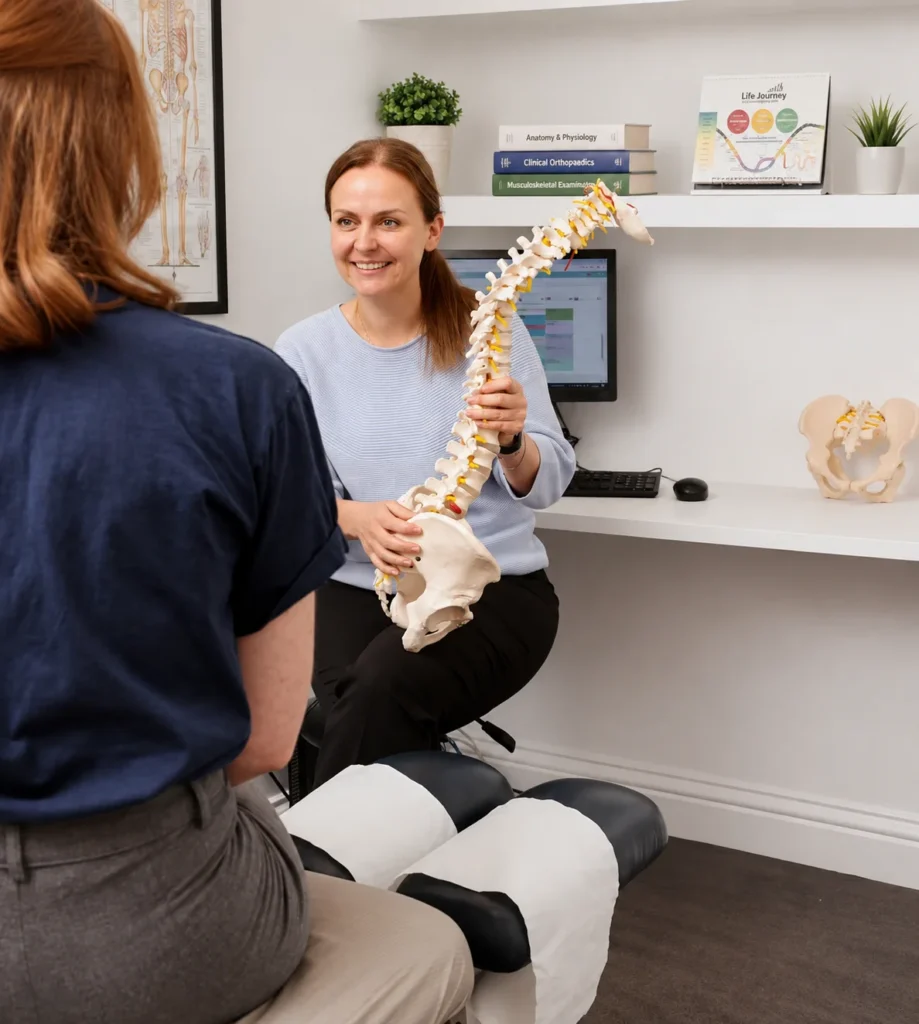
Your physiotherapy appointment starts with a thorough assessment of your symptoms, movement and individual needs. From there, your physiotherapist may use a combination of hands-on treatment, movement advice and a tailored rehabilitation programme.
Your programme is designed around your specific goals, whether you want to return to sport, manage an ongoing problem, recover from an injury or get back to normal activities at work and home.
Book your physiotherapy appointment at our Islington N1 clinic today.
How we approach physiotherapy
An injury or painful area does not always exist in isolation. For example, knee pain may be influenced by how the hip and leg move, while shoulder symptoms can sometimes be affected by movement and loading through the neck and upper back. That is why our physiotherapy assessment looks beyond the painful area and considers your overall movement pattern, activities and individual circumstances.
Once your physiotherapist understands what may be contributing to your symptoms, your treatment plan can combine what we do in the clinic with what you do between appointments.
Hands-on treatment may be used to help reduce pain, improve movement and make it easier for you to exercise. Your rehabilitation programme then focuses on areas such as strength, mobility, movement control and gradually increasing your ability to tolerate the activities that matter to you.
Your exercises will be tailored to your condition, goals and lifestyle, whether you are returning to sport, recovering from an injury or trying to manage an ongoing problem.
Sometimes, another type of treatment may be more appropriate for your particular presentation. If your physiotherapist feels that chiropractic care could be helpful, they may discuss this option with you. Because our physiotherapy and chiropractic services are within the same clinic, an internal referral can be arranged without you having to repeat your entire assessment from the beginning.
Treatment methods
Your physiotherapy treatment will be tailored to your symptoms, assessment findings and goals. Depending on your individual needs, your physiotherapist may use a combination of hands-on treatment and exercise-based rehabilitation.
- Manual therapy: Hands-on techniques used to help reduce pain and improve joint and soft-tissue movement.
- Joint mobilisation: Controlled, graded movements applied to a stiff joint to help improve mobility and range of movement.
- Soft tissue release: Targeted techniques applied to muscles and other soft tissues to help reduce tension and improve movement. This may be combined with a course of massage therapy where appropriate.
- Dry needling: Fine, sterile needles are used to target areas of muscular or myofascial tension. Your physiotherapist will assess whether this approach is appropriate for you.
- Strength and mobility programmes: Structured, progressive exercises designed around your specific problem and goals. Your programme is reviewed and adapted as you progress.
What we treat
Our physiotherapy service in Islington can help with a range of musculoskeletal problems and sports injuries, including:
- Back pain and disc-related pain
- Sciatica
- Neck pain
- Shoulder pain and rotator cuff injuries
- Elbow and wrist pain
- Hip and gluteal pain
- Knee pain, including patellofemoral pain
- Iliotibial band syndrome
- Ankle pain and heel pain
- Running injuries, including plantar fasciitis
- Sports injuries
Your physiotherapist will assess your symptoms and movement before recommending an appropriate treatment approach. If your presentation would benefit from a different form of care, they can discuss the available options with you.
What happens at your first session
Your first physiotherapy appointment at our Islington N1 clinic includes a 45-minute initial assessment. Your physiotherapist will start by asking about your symptoms, how the problem began, what makes it better or worse, your work or training demands, and what you would like to achieve from treatment.
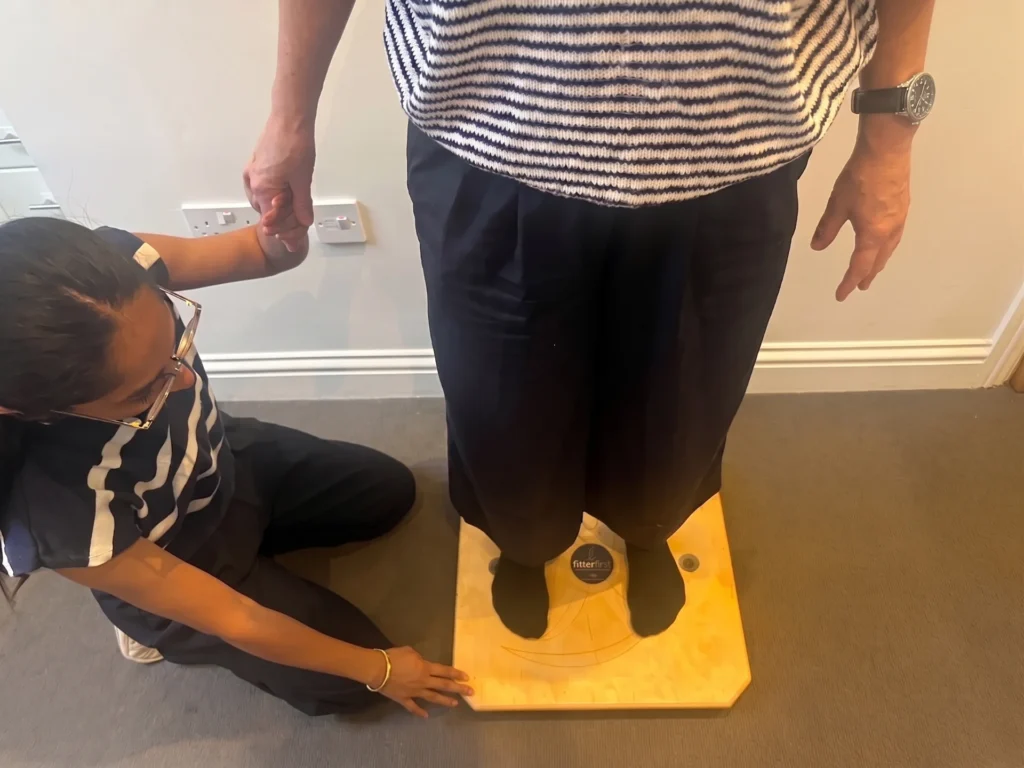
A physical assessment then looks at the factors that may be contributing to your symptoms. Depending on your problem, this may include assessing your movement, strength, joint range of movement and, where relevant, how you perform the specific activity or task that brings on your symptoms.
Once the assessment is complete, your physiotherapist will explain their findings and discuss the treatment options that may be appropriate for you.
Where appropriate, you will receive treatment during your first appointment, along with the first stage of an individual exercise programme to work on between sessions.
What happens at follow-up appointments?
Follow-up physiotherapy appointments are 30 minutes. These sessions are used to review your progress, reassess your symptoms and movement, and gradually progress your exercise and rehabilitation programme as your strength, mobility and tolerance improve.
Your Physiotherapist
Aditi is dually qualified as a chiropractor and physiotherapist. Her full background is on her profile page.
Fees
Every treatment we offer is listed together on our fees page.
| Appointment | Duration | Fee |
|---|---|---|
| Initial assessment | 45 minutes | £99 |
| Follow-up | 30 minutes | £87 |
| 5-session package | £413.25 (5% saving) | |
| 10-session package | £783 (10% saving) |
Using Your Insurance
Bupa, AXA, WPA and Cigna policies are accepted. Because plans differ on session limits, excess and referral requirements, contact your insurer before your first appointment to confirm what is covered. Our full price list is on the fees page.
Finding the Clinic
Appointments take place at 15 Prebend Street in N1, within easy reach of Essex Road, Angel and Highbury and Islington underground stations. See the clinic page for transport links, parking and opening times.
Questions Patients Ask
What should I wear?
Loose clothing you can move in. If the problem is in your knee, hip or ankle, shorts are helpful. We have gowns available if you would prefer.
Will I be given exercises?
Yes. Exercise is central to physiotherapy, and your programme will be tailored to what you can realistically fit into your week.
Should I see a physiotherapist or a chiropractor?
There is considerable overlap between chiropractic and physiotherapy, and both can help with a range of musculoskeletal problems, including back pain, neck pain, joint pain and sports injuries.
At our clinic, chiropractic care takes a broader view of how your joints, muscles and nervous system are functioning together. Your chiropractor will assess your movement, joint function and relevant neurological findings to understand what may be contributing to your symptoms. Treatment includes hands-on techniques such as joint manipulation and mobilisation, alongside exercise, rehabilitation and advice where appropriate.
Physiotherapy can place greater emphasis on movement, rehabilitation, strength and gradually rebuilding your capacity for specific activities, while also using hands-on treatment where appropriate.
The right approach depends on your symptoms, assessment findings and goals. If you are unsure where to start, contact us and our reception team can help you choose the most appropriate appointment. If your assessment suggests that physiotherapy or another approach would be more suitable, we can discuss this with you and arrange an internal referral where appropriate.
How soon after an injury can I be seen?
Usually straight away. Early assessment helps rule out anything more serious and gets sensible loading advice in place from the start.