Heel Pain Treatment in Islington
Heel pain has several distinct causes that feel broadly similar to the person experiencing them but need quite different treatment. Working out which one you have is the point of your first appointment.
Where the pain sits, and what it suggests
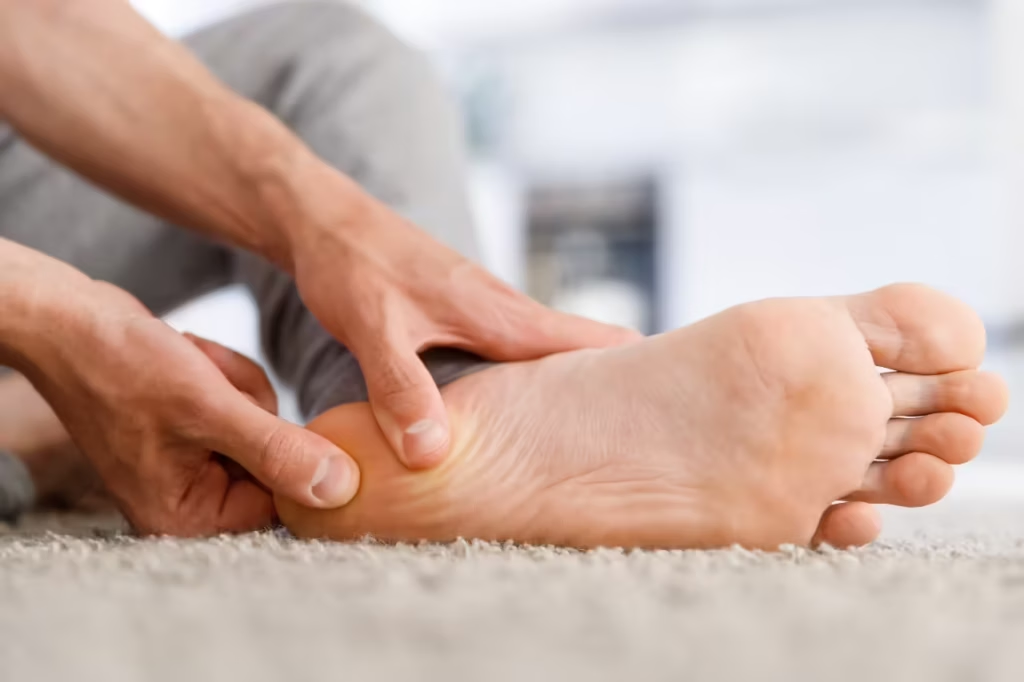
Under the heel, worst on first standing. Most commonly plantar fasciitis, which has its own page covering assessment and treatment in more detail.
At the back of the heel. Often Achilles tendinopathy, where the tendon becomes painful and thickened with load. Typically stiff at the start of activity and eased as it warms.
Deep and bruise-like under the heel. Can indicate irritation of the heel fat pad, the cushion of tissue that absorbs impact. More common with age, thin-soled footwear and hard surfaces.
Burning, tingling or radiating. Suggests nerve involvement rather than tendon or fascia, including entrapment of nerves around the inside of the ankle. Nerve symptoms that begin higher up the leg are assessed differently again.
In an active child or adolescent. Frequently calcaneal apophysitis, affecting the growth plate at the back of the heel during growth spurts.
Assessment
Your practitioner will ask when the pain is worst, what provokes it, what your footwear is like and how your activity has changed recently. The examination covers palpation of the specific structures, ankle and first toe range of movement, calf flexibility and strength, and how you load the foot when walking.
That combination usually identifies the cause without imaging. Thickened skin at the heel is dealt with at the same visit where it is contributing, as described on our callus and corns page.
Treatment
Because the causes differ, so do the plans. Tendon problems respond to graded loading. Fat pad irritation responds to cushioning and offloading. Nerve-related pain needs a different approach again, and mechanical contributors may need addressing with padding or orthotic support.
Podiatry, physiotherapy and chiropractic are all available here, and your assessment determines which leads.
When to seek medical advice
Contact your GP or attend urgent care if the heel becomes hot, red and swollen with fever, if you cannot bear weight following an injury, or if you felt a sudden snap at the back of the ankle with immediate loss of push-off power.
Practitioners
Qualifications, registration numbers and clinical interests are set out on each team member’s profile.
Fees
A podiatry appointment costs £65. If your care is led by a chiropractor or physiotherapist, the initial assessment is £99. The fees page covers follow-ups and packages.
Questions
Is all heel pain plantar fasciitis?
No, though it is the most common single cause. Achilles problems, fat pad irritation and nerve-related pain all present differently and are treated differently.
Do I need an X-ray for a heel spur?
Heel spurs are frequently found in people with no pain at all and are rarely the cause of symptoms, so imaging seldom changes what we do.
Why is my child’s heel pain different?
In growing children the growth plate at the back of the heel is a common source of pain and is managed with activity modification rather than the approaches used in adults.